Showing posts with label AP Scoring. Show all posts

20080127

Infelix Me

I've spent the past two weeks sick with the 97th Annual Departmental Flu, which I blame entirely on a certain colleague who just got back from England. While this isn't that bad—and I'm mostly over it—it did cause me to royally flub my Lysistrata lecture on Thursday. Curiously, it was only that lecture, out of the eight I've had to do in the past fortnight, but perhaps it was because I made the mistake of relying on memory to get things done rather than really going back and reviewing the text and my notes.

Actually, the past few weeks have been frustrating on another level, because while I have notes from the last time I taught World Literature, I don't have them all: I was in the middle of typing them up when the hard drive on the lappy gave out, and I was not yet the sort of person who backed things up all the damn time. Paranoia, born of multiple (hopefully not annual) crashes, was not yet a permanent resident of my skull. As a result, I've had to reconstruct the lectures for Gilgamesh and Lysistrata, and I've also discovered that the lectures for everything else are just awful. I guess trying to write the kinds of lectures I did for ENGL 2303 in the summer wasn't yet part of my game. So . . . research ahoy! Which is like Chips Ahoy only with less chocolate and more library. Mmm . . . . Library.

Otherwise, it's been kind of quiet. My birthday passed with little incident, because I was sick, and because I am indecisive and so are all my friends, so anything to do with it was very last-minute. The discussion of American Gods in MKB's Culture of Longing seminar (soon to be on a bookshelf near you!) [1] did not go very smoothly, nor will this week's of Weber's The Protestant Ethic and the Spirit of Capitalism, which if I hurry I might just finish in time for class. I'm also sitting in on WAQ's impromptu (and very crowded) Old English kaffeklatsch currently held in his office; we're doing what we've done before, which is the "go away and read this, come back and we'll all stumble over the language and the translations, and then you'll all go away again." It's good practice, though, because someday, should I get tenure, someone is going to ask me if I can teach an Old English course, and I'd rather not have to say no, to which they'll reply so why did we hire a medievalist and I'll say because you needed someone to teach Chaucer, not Beowulf and then there would be fisticuffs. So, let's learn OE!

I still haven't heard from ETS about scoring the AP exam this year, but as I and several of my co-scoring friends (Hi Amalie!) have determined, they seem to be running a bit behind this year.

Meanwhile, the Graduate Students in English held a workshop on publication, which was largely successful even if Certain Persons turned it once more into the this profession is dark and will chew you up and spit you out in tiny pieces conversation. It was pretty good, and had some useful advice, such as:
  • Write publishable articles and do the marketing, which seems mean "read lots of criticism so you can get an idea of what good criticism looks like and what journal(s) are more likely to accept the stuff you do."
  • Q: When should grad students begin to publish? A: When you can use criticism without using it slavishly.
  • "On the job market" is too late to start publishing; however, having been accepted is what matters (i.e. you can list something as "in publication" on your CV).
  • Don't always be daunted by responses/rejections.
  • KEEP sending them to good journals.
  • Start from the best journal and go down; that way, even if it's rejected by them, it hasn't been locked up by some journal with low prestige.
  • It's okay to publish outside your field at first; some people will look askance at out-of-field publications, but they shouldn't. DO try to have something in your field, and you shouldn't go on the market with publications not in your field unless you're prepared to defend yourself.
  • Always write for publication. Assume that other people are already part of the conversation; don't summarize too much. You don't have to tell them everything you know.
  • Try to form a writing group of two or three peers to co-read each other's work; often this group will last beyond your college years.
  • Read what the journal says its goals are. Don't send things to journals that they won't publish. (Apparently Shakespeare Quarterly gets a lot of non-Bard articles). ONLY library time will tell you for sure.
  • Look for what the journal wants: its house style, the content of its articles, the LENGTH (usually ~30,000 words) and format requirements. Make sure your stuff is up to their standards BEFORE you send it off.
  • Spend one day or so every few weeks just sitting in the library reading journals.
  • Make the cover letter short and to the point (My name is this; this is my article; please consider it for publication). Don't pour your heart out. DO put it on departmental letterhead.
Sound advice, all.

Right. I've got a lecture on the Ramayana to finish, and another lecture on how to write like an academic (as if I know) to build from scratch/borrow heavily from Gerald Graff.

NOTES:
[1] If you think I'm kidding about this, then you should know that the syllabus for this seminar contained a very telling typo: This volume will detail the development of the various kinds of national myths . . . .

20070619

Weird Little Kids
(an AP scoring report)

originally written 15:15 CST, 18 June 2007

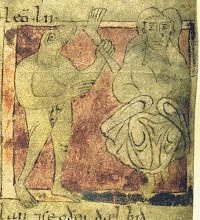
Ninety percent of the time, I don't mind flying. Ten percent of the time, however, I genuinely despite it and spend hours dreaming of a coast-to-coast, high-speed rail network, like British Rail on crack. The reason for this is simple: as I write this—by hand, since network time is expensive—I am on hour six of what should have been a two-hour layover and, as of this morning, still was. However right as we got on the bus at six (EST), we discovered that the 10:40 flight to DFW had been inexplicably canceled. Cue frantic attempts to reschedule, a hassle-up at TSA scanning which cost me half a bottle each of shampoo, conditioner, and toothpaste as well as a Leatherman I'd had since high school, and a literal run to the terminal to get on at the last second. As I say, I've been in DFW since 10:00 local time, which means, considering I woke up at 3:00 EST this morning, that I've been up for fourteen hours. Currently I ache in strange places, like the bottom of my feet or the inside of my biceps, and I'm starting to feel a bit like a Donestre, and may in fact eat someone and weep over their head if I don't get to sleep on the plane. [1]

However, this comes at the end of an otherwise wonderful week. Amalie and David sold it well: you do a lot of what amounts to grindingly repetitive though mildly amusing work, and then you're on the beach or in the bar by five. The food is institutional yet plentiful—like "gluttony popcorn," it didn't taste good but there was plenty of it. [2] Most of the people are great (hello to Shirl Chumley, Grimsley Graham, Joan Snyder, and the lovely Melissa Vosen), and the few who aren't are easily avoided.

I think I'm allowed to talk about the questions now that the scoring is over, but I'll be circumspect anyway. Before I go on, let me say that it's highly likely that everything between the next sentence and the three # signs is the property of Educational Testing Services; I believe, however, that posting these anonymously and without any personal gain other than a good laugh is fair use, but if it isn't, contact me and I'll be glad to remove any offending material.
That said, I was assigned to question 3, which asked students to take a position on the ethics of offering incentives for charitable donations, such as bonus points in class for donations. Most of the kids were okay, but some were strange. . .
  • Charity is something that is always willing to take the extra change off your hands, is willing to have you come over and fix that hole in the wall free of charge, and would love to sit and talk about how many touchdowns you scored, back in the day.
  • If (hypothetically) there were two objects teetering equally balanced on a mountain, one is a suitcase full of money, the other is an infant, which would you grab?
  • Although in the twenty-first century we may claim to be sophisticated, we are no better than our ancestral thieves.
  • If children are engaging in this sort of sacrifice for an A+, I personally fail to see how this is less degrading or dehumanizing than a young woman exploiting her body for a better grade.
  • On the surface the group opposed to this exchange may be more attractive, more magnetic to your north and south poles. But before you go welcoming in Santa Claus, make sure it's not a wolf in gramma's clothes.
  • At my school, one of the clubs required its members to sell two bags of onions for a charity or they would not be allowed to return next year. (Frankly, anything that gets you out of the Soviet Poland club is probably a good idea. -- ed)
  • More often than not, moms and dads resort to a trail of stickers that leads to a prize. I remember sitting on the toilet for hours to get a tic-tac. Well, two if it was number two.
. . . while others were just confused. . .
  • I was thought [sic] that if you do it out of your own will, with the goodness of your heart, you don't need a reward because the reward was the goodness you inflicted [sic].
  • As I started applying to colleges, I milked the Darfur cow until I was accepted.
  • It is a dark and dreary night. (opening sentence)
  • Not everyone is going to be as kindhearted or generous as Boo Radley or the woman at the county fair.
  • Ethics is a simple but yet [sic] complicated thing. It has so many sides to it's [sic] coin. Ethics is a world wide thing. Some if not most people say ethics just disturbs the natural order of things. I guess I'm just one of those such people. Ethics just bother me.
. . . while still others were filled with useful knowledge. . .
  • Humans are regretfully greedy.
  • Incentives for charity began when people figured out that people are human, and humans are not "selfless" (generally speaking).
  • George Washington risked his life at war, lived among the other soldiers, and defeated the enemy. Benjamin Franklin sat on [sic] a room for hours, in order to develop the Bill of Rights.
  • Charity has changed from its humble beginnings as a beggar on the street.
  • There are many all over the world who are in need. There are also those who are well-endowed and need no help at all.
  • The ethics of this or any debate can rage on for decades.
Also, I'm to pass along this: "I ♥ Mr. McBride. Y'all should give him a raise." Lucky you, Mr. McBride.

I scored 1087 essays or 0.38% of the total number of essays. Of that, 14 students used the word "donator" instead of "donor,"[3] four opened by comparing charity to love (a correct assertion, etymologically speaking) five suggested by name classical or operant conditioning, four suggested the moral position of "tzedakah" (two of them effectively), seven mentioned pride and Prejudice, four mentioned Clueless, another four mentioned the episode of Friends in which Phoebe tries to do a charitable act without getting something in return, seven believed andrew Carnegie "invented charity," and five confessed to being Eagle Scouts (two confessed to having gotten their Girl Guides Gold Awards, though not in the same essay as the Eagle Scouts).

# # #

Anyway, that's my AP scoring report. I'm about halfway through Arab Historians of the Crusades, and will finish it just as soon as I have a brain again. I've also been tapped to teach ENGL 2303, Survey of English Literature to the 17th Century, in Summer II, instead of WLIT 1113. I hope to get the book tomorrow or Thursday and have all that planned out.

More as it develops. Today will be spent doing laundry, cleaning the bathroom, shopping, and watching some Doctor Who.
__________
[1] As it happened, no-one had the seat next to me, and I had a nice and restful flight until we got ready to deplane and discovered the jetway was broken, and we had to be towed to another gate. I nearly cried.
[2] This refers to a story I've now lost track of, originally published in Fantasy and Science Fiction sometime in the nineties, concerning a young Jesus who tries out for little league. Anyone who can find that story gets a bribe.
[3] I'm not sure this is a real word, but if it were, it would by etymology mean "someone who has been given as a gift."

20070618

I believe the word is "bleurg"

I'm back from scoring AP exams in Florida. I wrote a report, which I'll post tomorrow when I have a brain again and my arms stop hurting from schlepping my luggage around.

For now, I'm thinking shower, as soon as Joni Mitchell's done singing "This Flight Tonight," which has been in my head but not on my mp3 player all week.

20070610

Right, well then, I'm off...

I'm leaving for Daytona Beach, city of magic, city of lights—none of which I actually get to see, as I'm going there to score Advanced Placement (AP) exams. For those of you who don't know, AP exams are an array of tests designed to get high school students out of college courses, and in my case I'll be helping (or hindering) students from taking composition. It might be fun, it might be tedious, it might be Dr. Spock's back-up band, but it'll be in Florida, and that's something.

The upshot of this is that I probably won't post something about the next book on my list, Arab Historians of the Crusades until the middle of next week at best. Lots of work. Busy busy busy. Plus I'm also taking a few articles—including Hilario Franco's "La construction d'une utopie: L'Empire de Pretre Jean" and Catherine Brown's "In the Middle"—and, until this morning, I was going to take Cormac McCarthy's Child of God, but will now take Alfred Crosby's The Measure of Reality: Quantification and Western Society, 1250-1600, because I'm mad like that, and also because I don't want to make friends. Chances any of it will get read except on the plane? 23.2%

See you in eight days!